
Essential Products For Professional-Grade Thermostat Installations
Equip yourself with high-performance tools and components designed for durable and accurate thermostat setups.
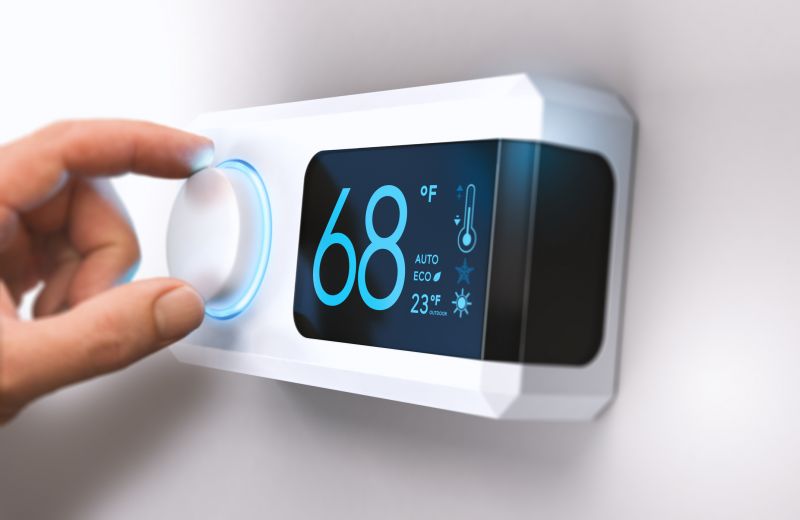 Installing a thermostat is a common upgrade that can enhance the comfort and efficiency of heating and cooling systems in residential and commercial spaces. The process involves selecting the right type of thermostat, ensuring compatibility with existing HVAC systems, and proper installation techniques. Modern thermostats come with a variety of features, including programmable settings, Wi-Fi connectivity, and compatibility with smart home systems. Understanding the different product options available can help users make informed decisions tailored to their specific needs.
Top Overall Option
Universal Smart Thermostat
A versatile smart thermostat designed to work with a wide range of HVAC systems, offering easy installation, user-friendly interfaces, and remote control capabilities. It provides customizable scheduling and integration with smart home ecosystems, making it a popular choice for those seeking flexibility and convenience.
Types of Products For Thermostat Installations
Programmable Thermostats
Allow users to set schedules for heating and cooling, helping to optimize system operation and energy use.
Wi-Fi Enabled Thermostats
Offer remote access via smartphone apps, enabling adjustments from anywhere with internet connectivity.
Learning Thermostats
Automatically adapt to user preferences over time, providing personalized comfort settings.
Digital Thermostats
Feature digital displays and straightforward controls for easy temperature management.
Mechanical Thermostats
Use traditional dials or sliders, suitable for basic temperature control without electronic components.
Wireless Thermostat Kits
Include components for installing thermostats without extensive wiring, ideal for retrofit projects.
Z-Wave Thermostats
Compatible with Z-Wave smart home systems, allowing integration with other devices.
Voice-Controlled Thermostats
Enable voice commands through virtual assistants for hands-free operation.
Touchscreen Thermostats
Provide intuitive interfaces for easy programming and adjustments.
Line Voltage Thermostats
Designed for electric heating systems, controlling high-voltage circuits.
Low Voltage Thermostats
Typically used with standard HVAC systems, operating on lower voltage levels.
Smart Home Ecosystem Compatible Thermostats
Integrate seamlessly with broader smart home systems for centralized control.
Popular Choices
Offers flexible installation options and remote control features, making it a trending choice among homeowners.
Provides an easy-to-use interface with customizable settings, popular for modern upgrades.
Allows scheduling and remote adjustments, fitting well with busy lifestyles.
Popular for integration with existing smart home systems and automation setups.
Gaining popularity for its adaptive scheduling and convenience features.
Still widely used for simple, reliable temperature control without electronic components.
Trending due to compatibility with virtual assistants and hands-free operation.
Specifically designed for controlling radiant floor heating systems.
Common in electric heating setups, offering straightforward operation.
Allows centralized control through a home automation hub, popular among tech enthusiasts.
When choosing a thermostat, considerations such as compatibility with your HVAC system, ease of installation, and user interface are important. Some thermostats require professional installation, especially those with complex wiring or advanced features, while others are designed for DIY setup. Additionally, features like touchscreens, remote access, and learning capabilities can add convenience but may also influence the overall cost and complexity.
Proper installation ensures optimal performance and safety. It involves turning off power to the system, correctly wiring the thermostat according to manufacturer instructions, and testing the setup to confirm proper operation. For those unfamiliar with electrical work, professional installation services are recommended to avoid potential issues and ensure compliance with local codes. Once installed, regular maintenance and updates can help keep the thermostat functioning smoothly and efficiently.
Choosing the right products for thermostat installation can significantly impact the ease of use and system performance. Whether upgrading an existing system or installing a new one, understanding the available options helps in selecting the most suitable device for your environment.
Key Buying Considerations
- Compatibility with existing HVAC system and wiring requirements
- Type of thermostat suitable for your heating and cooling setup
- Ease of installation, whether DIY or professional installation needed
- Features such as programmable scheduling, Wi-Fi connectivity, and voice control
- Display interface and user-friendliness
- Compatibility with smart home ecosystems or automation systems
- Power source options, such as batteries or hardwired connection
- Size and mounting options to fit your space
- Energy management features and user customization options
- Brand reputation and customer support services
- Additional sensors or accessories needed for optimal performance
- Warranty coverage and product durability
- Compatibility with multiple zones or multi-stage systems
- Cost considerations relative to features offered
- Regulatory and safety standards compliance